The Predictive Index Reference Profile
Maverick
Mavericks can adjust quickly to changing conditions, generate novel ideas on the fly, and generally deal with fluid situations well. They are driven to get things done - and specifically, they’re focused on getting the important things done quickly.

What is a Maverick
The Maverick is an independent, confident, and decisive self-starter. They generally respond positively to pressure, assured in their ability to handle most people and problems. They can have a stimulating influence on others, direct and determined, while still being relatively flexible.

Venturesome


Competitive


Ambitious

Restless
Managing Mavericks
Mavericks need ample opportunity to express - and act on - their own ideas and initiatives. Autonomy and flexibility allow them to thrive in their role, and they also appreciate recognition and opportunities for advancement when they have success.
Learn how to manage Mavericks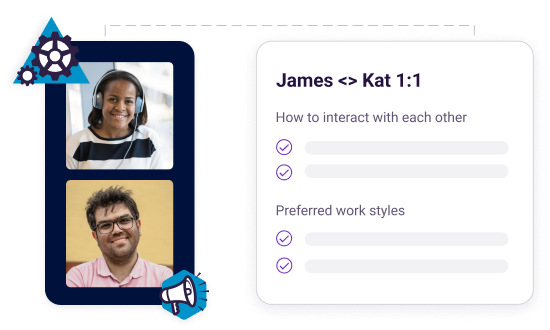
Maximize Maverick potential
Optimizing Maverick impact is often about creating space - through variety, new challenges, and new responsibilities. Given the freedom to demonstrate their abilities, they can flex their innovative and ingenious qualities to the benefit of the greater good.
Learn how to maximize Maverick potentialGet deeper insights into your team with the PI Behavioral Assessment
Onboard, coach, and develop Mavericks
Empower your Maverick from day one. Use behavioral insights from PI Perform, PI Hire, and PI Inspire, to create professional growth plans and offer actionable feedback according to their unique behavioral pattern.
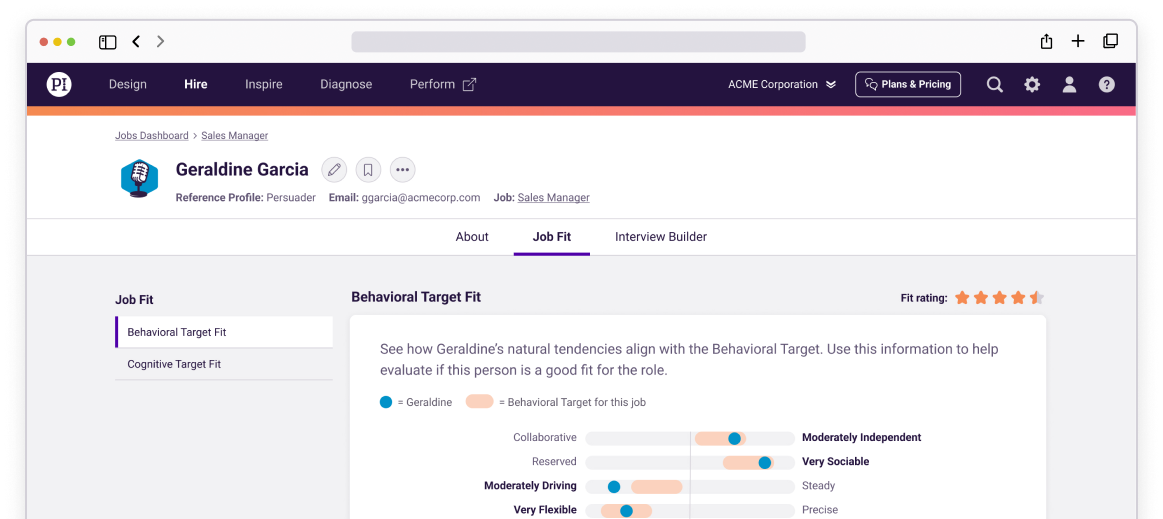
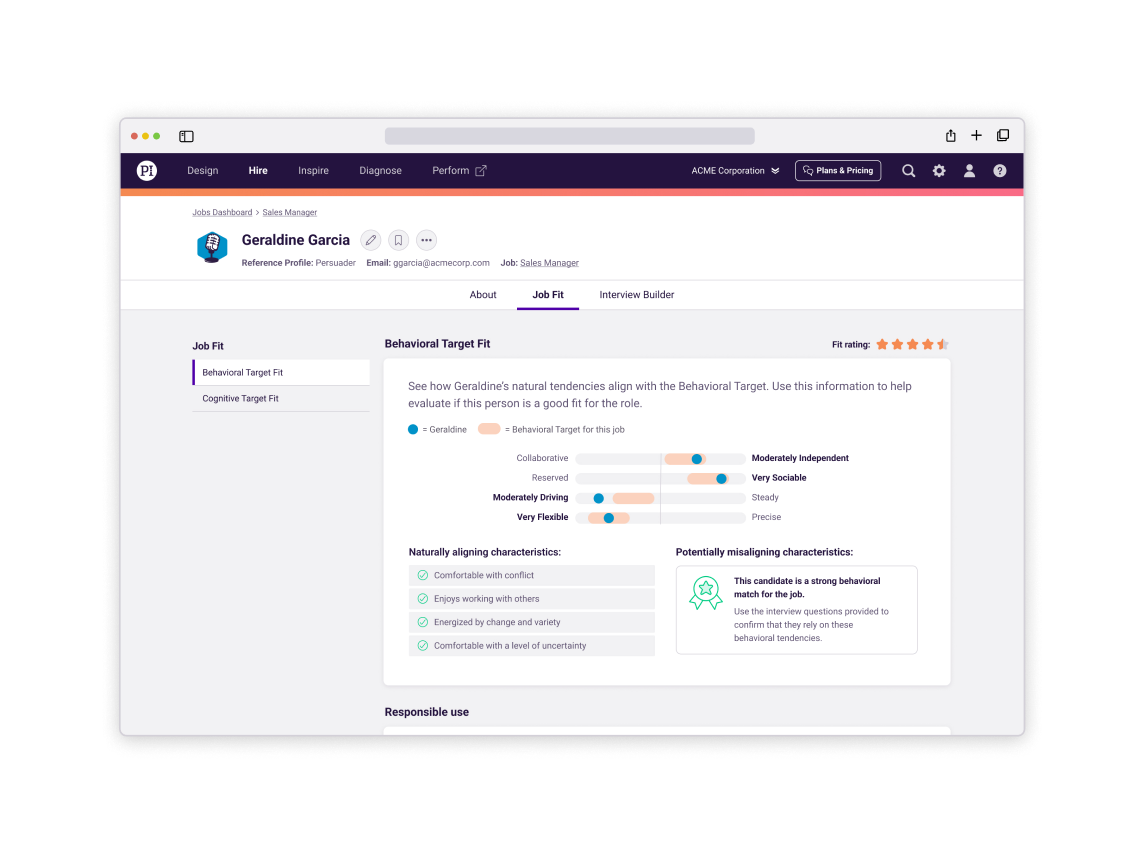
Candidate Behavioral Report
Activate insights related to workplace behaviors, strengths, and caution areas.
Coaching tools for managers
Empower continuous feedback, 360 feedback, and employee recognition.
Goals
Management
Enhance visibility into company initiatives and personal development goals.
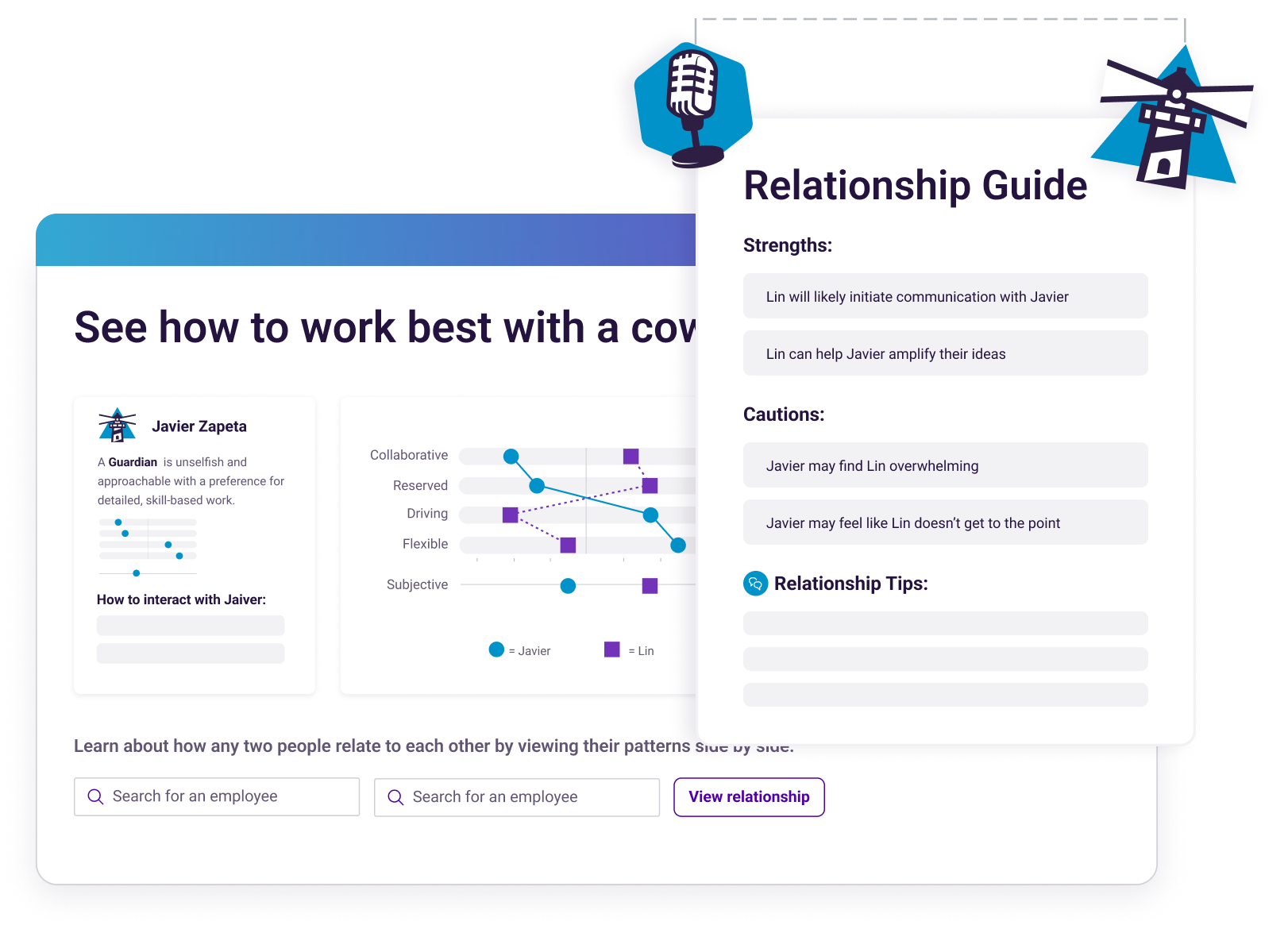
Management Strategy Guide
Customize guidance and feedback to your employees' unique behavioral needs.
Activate insights related to workplace behaviors, strengths, and caution areas.
Learn moreExperience the power of PI firsthand.
Schedule a demo to see how the PI platform can transform your team dynamics and drive performance.
Learn more about the Maverick Reference Profile
Mavericks are essential to keeping your team running smoothly. By maximizing their potential, you can elevate your team’s productivity. Understanding their unique strengths and areas for growth is the first step in tailoring your management approach.
Frequently asked questions
The Maverick is one of the 17 Predictive Index (PI) Reference Profiles. Mavericks are innovative, fast-moving individuals who adapt quickly to changing conditions and generate new ideas on the fly. They are driven to get important things done quickly and thrive in fluid, dynamic environments. This profile reflects someone who values speed, flexibility, and creative problem-solving.
Mavericks are known for their adaptability, innovation, and ability to act quickly. They think outside the box, handle change well, and are highly driven to execute. Their direct communication style and willingness to take risks make them effective in fast-paced environments where quick decisions and creative solutions are needed.
To manage a Maverick effectively, provide flexibility and minimize unnecessary rules or constraints. They perform best when given autonomy and the ability to move quickly. Managers should focus on clear priorities and outcomes, while allowing room for experimentation and rapid decision-making. Avoid overly rigid processes, as they can limit a Maverick’s effectiveness.
On a team, Mavericks bring energy, speed, and innovative thinking. They help teams move quickly, challenge conventional approaches, and adapt to change. However, their preference for speed and flexibility may create tension in highly structured or detail-focused teams—so balancing them with more process-oriented profiles can improve overall team performance.
Reference Profiles are broad, descriptive categories based on results from the PI Behavioral Assessment.
- Every person who takes the assessment is assigned to one of 17 Reference Profiles.
- These profiles provide a general snapshot of workplace behavior without needing to interpret individual factor scores.
Reference Profiles are built from the four primary behavioral drives:
- Dominance (A)
- Extraversion (B)
- Patience (C )
- Formality (D)
A person’s factor scores act like coordinates. Those coordinates are compared to standardized, prototypical profile patterns. The individual is assigned to the Reference Profile that is closest to their pattern.
The Predictive Index is grounded in behavioral science and validated assessment methodology. It measures core behavioral drives (Dominance, Extraversion, Patience, and Formality) that help predict workplace behavior and performance.
Reference Profiles themselves are not meant to be exact representations of a person, but rather a reliable generalization of behavioral patterns. They are created by comparing an individual’s behavioral data to standardized profile patterns using statistical methods.
Importantly:
- Reference Profiles provide a “general neighborhood,” not an exact house
- Individual patterns may vary within the same profile
- The most accurate insights come from combining the full behavioral pattern + profile
This means PI’s behavioral science is accurate in identifying behavioral tendencies and workplace patterns, especially when used as part of a broader, data-informed decision-making process.
Reference Profile data is used as a starting point for understanding workplace behavior, and helping teams make better people decisions across hiring, management, and team design.
You can use it to:
- Quickly understand behavioral tendencies
Reference Profiles provide a shortcut to understanding how someone prefers to work, communicate, and make decisions. - Improve hiring decisions
Match candidates to roles based on behavioral fit, not just skills or experience. - Personalize management and coaching
Adapt communication style, expectations, and feedback based on how someone works best. - Strengthen team dynamics
Compare profiles across a team to understand differences, improve collaboration, and identify gaps. - Guide development conversations
Use insights to support growth, highlight strengths, and address potential caution areas.
Most importantly, Reference Profiles should be used alongside full behavioral data—not in isolation—to make more informed, data-driven people decisions.